

What is SD-WAN: Complete Guide to Modern Network Management
What is SD-WAN: The Ultimate Guide to Modern Network Management
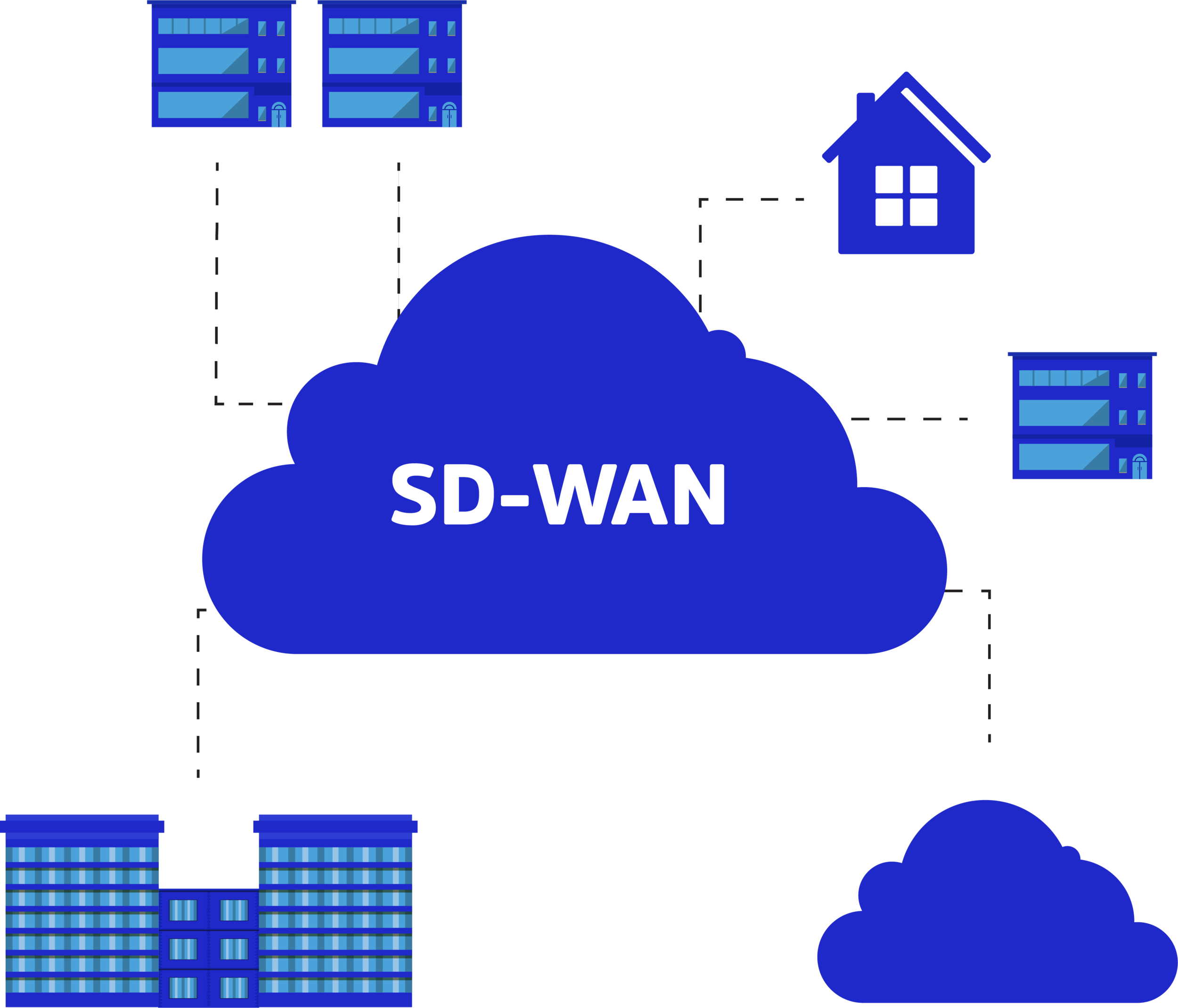
Businesses today rely on high-performance, secure, and scalable networks to connect employees, applications, and cloud services. Traditional WAN architectures struggle to keep up with cloud adoption, remote work, and dynamic application requirements. This is where SD-WAN, or Software-Defined Wide Area Network, comes into play. WAN provides a flexible, intelligent approach to routing network traffic that reduces costs, improves performance, and enhances security.
Understanding what SD-WAN is and how it works is critical for IT leaders, MSPs, and enterprise decision-makers. This guide covers everything from foundational concepts to deployment strategies, managed WAN services, cloud integration, security considerations, and business continuity planning. By the end, you’ll have a complete roadmap for leveraging WAN to optimize your organization’s network infrastructure.

The Need for SD-WAN in Modern Business Networks
Traditional WANs often rely on expensive MPLS circuits and centralized data center architectures. As businesses adopt cloud applications like Office 365, Salesforce, and Zoom, centralized routing leads to latency, reduced application performance, and user frustration. SD-WAN addresses these challenges by decoupling network control from the underlying hardware and enabling intelligent, application-aware traffic routing across multiple connections, including broadband, LTE, and MPLS.
For example, a multi-branch retail chain in New York City might struggle with slow cloud POS performance due to traditional WAN bottlenecks. Deploying SD-WAN allows the network to prioritize POS traffic, route backups through lower-cost broadband connections, and automatically failover if one link experiences issues. This ensures consistent uptime, reduced latency, and optimized cloud application performance. Learn more about advanced network solutions in our managed IT services offerings.
How SD-WAN Works
SD-WAN is built on software intelligence that monitors network performance in real time and dynamically adjusts traffic flows to optimize speed, reliability, and security. Key components include:
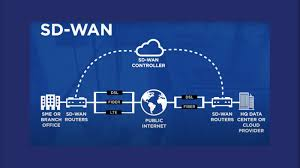
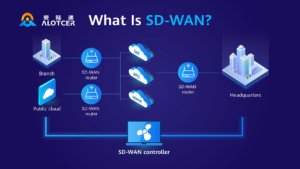
The SD-WAN controller, typically deployed in the cloud or on-premise, manages policies, monitors link performance, and enforces security rules. Edge devices, deployed at branch offices or remote sites, communicate with the controller and route traffic based on application priority, network conditions, and business policies. By abstracting network intelligence from physical devices,WAN reduces reliance on expensive MPLS circuits and simplifies deployment of new sites or cloud connections.

Traffic steering in SD-WAN is application-aware, meaning high-priority applications like VoIP or video conferencing receive guaranteed bandwidth while low-priority traffic uses available bandwidth efficiently. This is particularly important for organizations with remote employees, distributed offices, or cloud-first strategies.
Benefits of SD-WAN
Implementing SD-WAN offers significant operational, financial, and strategic benefits. Operationally, SD-WAN simplifies network management by centralizing configuration, monitoring, and troubleshooting. IT teams no longer need to manually configure routers at each site, reducing errors and accelerating deployments.
Financially, SD-WAN reduces dependency on costly MPLS circuits by enabling secure broadband connections, lowering monthly WAN expenses. This cost-effectiveness allows businesses to reinvest savings into digital transformation initiatives.

Strategically, SD-WAN enables secure, scalable access to cloud applications, supports hybrid workforces, and enhances user experience by reducing latency and packet loss. Businesses gain visibility into network traffic, application performance, and security incidents, enabling data-driven decisions that optimize IT investments. For further insights, see our smart IT investment guide.
SD-WAN vs Traditional WAN
Traditional WAN architectures rely on static routing, manual configuration, and centralized hubs. They are less flexible, slower to deploy, and often costly due to MPLS or dedicated circuits. WAN, in contrast, uses software-defined policies, multiple transport links, and cloud-native management. The result is a more agile network that can adapt to changing workloads, scale quickly, and provide superior visibility and analytics. Learn more about network modernization through our managed IT services overview.
Security in SD-WAN
Modern WAN platforms integrate security features, including encryption, firewalling, intrusion prevention, and segmentation. By securing branch-to-branch and branch-to-cloud traffic, WAN reduces the attack surface while enabling centralized policy enforcement. Security policies can be applied dynamically based on application, location, or user, ensuring that sensitive data is protected without impacting performance.
SD-WAN Deployment Strategies
Deployment of SD-WAN can follow several approaches depending on the size of the organization, geographic distribution, and IT strategy. Small to medium businesses may leverage cloud-managed WAN platforms that require minimal on-site hardware. Large enterprises often adopt hybrid deployments combining on-premise controllers with cloud-managed orchestration to maintain visibility and control across thousands of endpoints.
For multi-site organizations in New York, deploying WAN enables faster branch activation, seamless cloud integration, and simplified network troubleshooting. By automating configuration, IT teams can respond rapidly to outages, performance degradation, or security incidents, ensuring business continuity. Explore our disaster recovery planning for complementary strategies.
Cloud Integration and Managed SD-WAN Services
SD-WAN is particularly valuable for organizations using cloud services. Traditional WANs route traffic through central data centers, often causing latency and bottlenecks. SD-WAN enables direct-to-cloud connections, improving application performance, reducing costs, and enhancing the user experience. Managed SD-WAN services allow businesses to outsource monitoring, policy enforcement, and incident response to experts while retaining strategic oversight. For New York enterprises, this means IT teams can focus on innovation rather than network troubleshooting. Learn more in our cloud migration management services.
Business Continuity
SD-WAN plays a key role in business continuity planning. By dynamically routing traffic across multiple connections, networks can automatically failover in case of a link outage. This redundancy ensures minimal downtime, allowing critical operations to continue without interruption. Combined with automated monitoring, cloud backups, and incident response plans,WAN strengthens organizational resilience against cyberattacks, natural disasters, and hardware failures. See our data backup and disaster recovery services for integrated strategies.
Real-World Examples of SD-WAN Benefits
Consider a nationwide retail chain with branches across New York State. Before WAN, each branch relied on expensive MPLS circuits with manual configuration and limited cloud connectivity. Deploying WAN allowed the company to prioritize POS and inventory applications, dynamically route traffic through broadband, and implement secure cloud integration. The result was reduced operational costs, faster branch onboarding, and improved transaction reliability. You can explore more managed IT and networking solutions in our managed IT services page.
Similarly, a financial services firm with multiple offices in Manhattan adopted SD-WAN to improve VoIP call quality and secure sensitive data. With real-time monitoring and automated failover, the firm minimized latency, eliminated dropped calls, and strengthened regulatory compliance. IT teams could focus on strategic projects rather than troubleshooting network issues.
SD-WAN Lifecycle and Management
Effective WAN deployment involves planning, configuration, monitoring, and continuous optimization. Lifecycle management ensures that policies remain aligned with business priorities, cloud applications perform optimally, and network security remains robust. Continuous monitoring enables IT teams to respond quickly to anomalies, while analytics provide actionable insights for capacity planning and cost optimization.
WAN is no longer a niche technology; it is a critical component of modern network architecture. Understanding what SD-WAN is, how it functions, and the strategic benefits it delivers empowers organizations to optimize performance, reduce costs, enhance security, and enable business continuity. Partnering with experienced providers like Rhumbu LLC ensures that New York businesses can deploy SD-WAN effectively, integrate it with cloud strategies, and maximize network efficiency. For guidance, consulting, and deployment support, contact our team today.
What is SD-WAN: The Ultimate Guide to Modern Network Management
Businesses today rely on high-performance, secure, and scalable networks to connect employees, applications, and cloud services. Traditional WAN architectures struggle to keep up with cloud adoption, remote work, and dynamic application requirements. This is where SD-WAN, or Software-Defined Wide Area Network, becomes a critical tool. SD-WAN provides a flexible, intelligent approach to routing network traffic that reduces costs, improves performance, enhances security, and delivers measurable business value.
Understanding what SD-WAN is and how it works is critical for IT leaders, MSPs, and enterprise decision-makers. This guide covers everything from foundational concepts to deployment strategies, managedWAN services, cloud integration, security considerations, and business continuity planning. By the end, you’ll have a complete roadmap for leveraging WAN to optimize your organization’s network infrastructure while future-proofing it for rapid growth and digital transformation.
The Need for SD-WAN in Modern Business Networks
Traditional WANs are often rigid, expensive, and inefficient. Most rely on costly MPLS circuits that centralize traffic through a primary data center. As businesses adopt cloud-based applications such as Microsoft 365, Salesforce, Zoom, and video conferencing platforms, centralized routing introduces latency, congestion, and user frustration. WAN addresses these issues by decoupling network control from the underlying hardware and enabling intelligent, application-aware traffic routing across multiple transport connections, including broadband, LTE, and MPLS.
For example, a multi-branch retail chain in New York City may struggle with slow point-of-sale transactions and inventory updates because its traditional WAN routes all traffic back to a central office. With WAN, the network can prioritize critical POS traffic, route backups over less expensive broadband, and automatically failover if a connection goes down. This not only ensures uptime and performance but also allows IT teams to scale branches quickly without heavy infrastructure costs. Businesses can learn more about comprehensive managed IT services that integrate SD-WAN deployments.
How SD-WAN Works
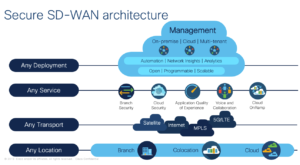
SD-WAN is built on software intelligence that continuously monitors network performance and dynamically adjusts traffic flows. The architecture typically includes a centralized controller, edge devices at branch offices or remote sites, and cloud orchestration for analytics and policy management. The controller monitors link performance, enforces policies, and ensures traffic is routed efficiently. Edge devices communicate with the controller, directing traffic according to application priority, bandwidth availability, and business rules.
This separation of control from physical devices allows organizations to deploy new sites, cloud applications, and VPNs quickly and consistently. Traffic steering is application-aware, meaning mission-critical applications like VoIP or ERP systems receive guaranteed bandwidth, while nonessential traffic, such as general web browsing, is routed more flexibly. The result is a network that is agile, reliable, and optimized for modern business requirements.
Operational and Strategic Benefits of SD-WAN
Deploying WAN offers both operational and strategic advantages. Operationally, IT teams gain simplified network management. Instead of manually configuring routers at every site, administrators can manage policies centrally, reducing errors and deployment time. Real-time monitoring alerts teams to performance degradation, packet loss, or security threats, enabling rapid resolution.
Financially, WAN reduces dependence on expensive MPLS circuits by allowing secure broadband connections. Many businesses save significant monthly expenses, freeing up capital for digital transformation initiatives. Strategically, SD-WAN enables hybrid workforces, direct-to-cloud access, and application-level prioritization, enhancing user experience and operational agility. Businesses also gain deeper visibility into network traffic, performance, and security events, which supports data-driven decisions. Learn more about maximizing ROI from IT investments in our smart IT investment guide.
SD-WAN vs Traditional WAN
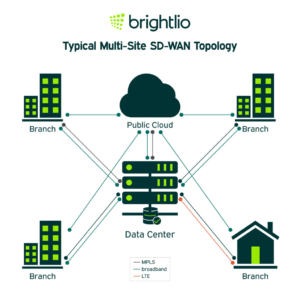
Traditional WANs are static, hardware-dependent, and often centralized. They require manual configuration, have limited scalability, and rely heavily on MPLS. WAN, by contrast, is software-driven, centralized for policy management, and transport-agnostic, allowing for multiple simultaneous connections, including broadband, LTE, and MPLS. The ability to steer traffic dynamically and prioritize applications ensures that critical operations, such as VoIP calls or cloud ERP systems, maintain high performance regardless of network conditions. Learn more about network modernization in our managed IT services overview.
Security
Security is integrated into modern WAN platforms, often including built-in encryption, firewalls, secure tunneling, intrusion prevention, and segmentation. This integration allows organizations to extend security policies consistently across multiple branch sites, remote workers, and cloud environments. Security policies can be dynamic, adapting based on application, user, or location, which ensures sensitive data remains protected without compromising performance.
Businesses operating in highly regulated sectors—such as finance, healthcare, and legal services—benefit from WAN because it provides both visibility and enforcement of security policies. IT teams can detect threats in real time, enforce encryption, and monitor compliance centrally, reducing the risk of breaches or audit failures. Our IT compliance solutions complement WAN deployments to strengthen regulatory readiness.
Deployment Strategies and Best Practices
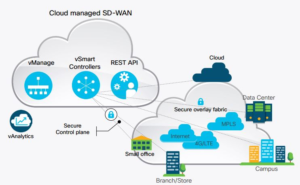
SD-WAN deployment depends on organizational size, geographic distribution, and IT maturity. Small businesses may leverage cloud-managed SD-WAN solutions, which require minimal on-site hardware and reduce management overhead. Enterprises often adopt hybrid models, combining cloud orchestration with on-premise controllers to maintain control over thousands of endpoints while taking advantage of cloud-based analytics and monitoring.
Key best practices include a thorough assessment of current WAN performance, defining application priorities, designing a multi-path transport strategy, and implementing rigorous security policies. Continuous monitoring, automated failover, and integration with existing network and cloud environments are also critical. For organizations in New York, effective WAN deployment allows rapid branch onboarding, resilient cloud connections, and seamless remote work capabilities. Explore our cloud migration and management services for integration support.
Business Continuity
SD-WAN supports business continuity by enabling automatic failover across multiple transport links. If a primary connection fails, traffic is immediately rerouted over secondary connections without disruption to users. Combined with monitoring, automated backups, and incident response plans,WAN strengthens organizational resilience. Financial institutions, healthcare providers, and large retailers in New York have leveraged WAN to maintain continuous operations during outages, natural disasters, and unexpected spikes in traffic. Our data backup and disaster recovery services provide complementary strategies.
Real-World SD-WAN Case Studies
A nationwide retail chain in New York implemented SD-WAN to address slow POS transactions and inconsistent branch connectivity. The solution allowed traffic prioritization for critical applications, broadband failover, and centralized monitoring. The outcome included a 50% reduction in network downtime, improved customer satisfaction, and decreased IT operational costs.
Similarly, a financial services firm with multiple Manhattan offices integrated SD-WAN to improve VoIP call quality and protect sensitive data. Real-time monitoring, automated routing, and security integration allowed IT teams to focus on strategic projects while ensuring uninterrupted business operations.
SD-WAN Lifecycle Management
The lifecycle of SD-WAN deployment involves planning, configuration, monitoring, security, and continuous optimization. SD-WAN is not a set-and-forget solution; ongoing policy updates, performance reviews, and security assessments are essential. Lifecycle management ensures that applications remain high-performing, business policies are enforced, and costs are optimized. By implementing a structured lifecycle approach, organizations can maximize the return on their SD-WAN investments.
SD-WAN and Cloud Integration
SD-WAN is particularly valuable in cloud-first environments. Traditional WANs route cloud traffic through central data centers, causing latency. SD-WAN enables direct-to-cloud connections, accelerating SaaS performance, reducing backhaul costs, and improving user experience. Managed SD-WAN services allow businesses to outsource monitoring, security, and policy enforcement while retaining strategic oversight. For NYC enterprises, this means IT teams can focus on innovation rather than troubleshooting networks. Explore our cloud management services for integration strategies.
SD-WAN is a transformative technology for modern enterprise networks. Understanding WAN is, how it operates, and the strategic benefits it provides empowers organizations to reduce costs, enhance performance, secure sensitive data, and enable business continuity. Partnering with experienced providers such as Rhumbu LLC ensures businesses in New York can deploy WAN effectively, integrate it with cloud strategies, and maintain robust network operations. For deployment, monitoring, or consultation, contact our team today to begin your SD-WAN journey.