


Why Local Businesses Should Outsource IT Support in Wisconsin
Why Local Businesses Should Outsource IT Support in Wisconsin | Rhumbu LLC
Imagine your small or medium-sized business in Wisconsin suddenly facing a network outage, a ransomware attack, or a server failure. Without expert IT support on hand, downtime can spiral into lost revenue, frustrated customers, and reputational damage. Outsourcing IT support is no longer a luxury—it’s a strategic necessity for any business that wants to remain competitive.
What Outsourcing IT Support Really Means
Outsourcing IT support involves hiring an external provider to manage your technology infrastructure, including hardware, software, security, and cloud services. This can range from Managed IT Services to on-demand technical support. Businesses no longer need to maintain large in-house IT teams, which saves money, reduces risk, and ensures 24/7 monitoring.
-
Computer Repair Services

Why Outsourcing IT Support Is Critical for Wisconsin Businesses
1. Cost Savings
Hiring a full in-house IT team is expensive. Salaries, benefits, training, and equipment can quickly exceed the cost of outsourcing. By outsourcing, businesses gain access to high-level expertise at a fraction of the cost.
2. Access to Expertise and Latest Technology
Outsourced IT providers bring specialized knowledge, certifications, and experience across multiple industries. They stay up-to-date with emerging cybersecurity threats, cloud solutions, and compliance requirements, which may be difficult for a small internal team.
3. Scalability
Outsourced IT services can scale as your business grows. Adding new users, locations, or cloud solutions is seamless without hiring additional staff.
4. Reduced Risk and Downtime
A managed IT partner proactively monitors systems, performs updates, and provides rapid incident response. This minimizes downtime, which can be costly for Wisconsin businesses in finance, healthcare, manufacturing, and retail.
Case Study: Wisconsin Manufacturing Firm
A mid-sized manufacturing firm in Green Bay faced repeated server crashes and software conflicts. After outsourcing IT support to a professional provider:
-
System uptime increased by 99.8%
-
Operational costs dropped by 30%
-
Employees spent 50% less time troubleshooting IT issues
Common Misconceptions About Outsourcing
-
“We’ll lose control of our IT.”
Outsourced IT providers work closely with your team, maintaining transparency and control while taking over repetitive tasks. -
“It’s only for big companies.”
Small businesses in Wisconsin benefit the most—they can access enterprise-level technology without huge budgets. -
“It’s not secure.”
Professional providers implement robust cybersecurity, compliance frameworks, and disaster recovery plans that often surpass internal capabilities.
How Outsourcing IT Boosts Business Productivity
By freeing internal employees from IT management, teams can focus on core business functions. Project timelines accelerate, customer service improves, and companies can expand operations without the bottleneck of IT maintenance.
Frequently Asked Questions (FAQ)
Q1: How do I choose the right IT outsourcing partner?
A: Look for providers with local Wisconsin presence, proven experience, certifications, and a portfolio of satisfied clients.
Q2: Will outsourcing affect our compliance requirements?
A: Professional IT partners ensure all systems meet industry-specific compliance standards (HIPAA, PCI, etc.).
Q3: Can small businesses afford outsourced IT?
A: Outsourced IT is cost-effective for businesses of any size, often saving thousands per year compared to in-house staff.
Q4: How quickly can we onboard an outsourced IT provider?
A: Many providers can start within days, with assessment and transition plans to avoid downtime.
The Wisconsin Business Reality: Why DIY IT Is Quietly Costing You Money
Across Wisconsin—from Green Bay and Appleton to Oshkosh, Madison, and Milwaukee—small and mid-sized businesses share a similar story. Technology started as a support tool. Over time, it quietly became the backbone of operations. Email, accounting systems, production software, POS systems, cloud storage, remote access, VoIP phones—everything depends on IT working correctly, all the time.

Yet many businesses still rely on internal “best effort” IT. A technically inclined employee. A part-time consultant. A reactive repair shop. On the surface, this feels cost-effective. In reality, it introduces compounding risk that rarely shows up on a balance sheet until something breaks badly.
Outsourcing IT support changes this equation. It replaces reaction with prevention, guesswork with strategy, and uncertainty with accountability.
The Hidden Cost of Downtime for Wisconsin Companies
Downtime is often underestimated because it doesn’t always look dramatic. It can be slow systems, intermittent outages, or small disruptions that chip away at productivity. But when you add it up across weeks and months, the cost becomes staggering.
For example, a Green Bay professional services firm experiencing just two hours of downtime per month across 15 employees loses more than time. It loses billable hours, delays client deliverables, and creates frustration that damages morale. Multiply this by a year, and the “cheap” IT approach quietly costs tens of thousands of dollars.
Outsourced IT support focuses on uptime as a business metric, not an afterthought. Monitoring systems continuously, patching vulnerabilities before they cause failures, and designing infrastructure that anticipates growth instead of reacting to it.
Managed IT Services Green Bay and On-Site IT Services Green Bay as solutions for uptime and proactive support.
Cybersecurity: Why Wisconsin Businesses Are Now Prime Targets
There’s a persistent myth that hackers only target large corporations. In reality, small and mid-sized businesses are often easier targets because they lack layered security and consistent monitoring.
Wisconsin businesses are especially attractive due to the mix of manufacturing, healthcare, logistics, and professional services—industries that rely on operational continuity and often carry sensitive data.
Outsourcing IT support introduces enterprise-grade cybersecurity controls that most internal teams cannot maintain alone. This includes managed firewalls, endpoint protection, phishing defense, network segmentation, backup verification, and incident response planning.
More importantly, outsourced IT providers understand how security connects to business operations. Security is no longer about installing antivirus software. It’s about reducing risk exposure while keeping workflows efficient.
Cybersecurity Services Green Bay and Data Backup & Disaster Recovery Services Green Bay in this section.
Compliance Without the Headaches
Many Wisconsin businesses operate under compliance frameworks they don’t fully realize until an audit or breach occurs. Healthcare providers must consider HIPAA. Retailers handle PCI compliance. Financial firms deal with data protection standards that evolve constantly.
Outsourcing IT support doesn’t just help you pass audits. It builds compliance into daily operations. Documentation, access control, encryption, backup testing, and user training become routine rather than reactive.
This is especially critical for businesses expanding into new markets or adopting cloud platforms without a compliance roadmap.
Cloud Migration & Management Green Bay and Software Installation & Support Green Bay.
The Staffing Challenge: Why In-House IT Isn’t Scalable
Hiring internal IT talent is increasingly difficult, especially outside major metro areas. Skilled professionals demand high salaries, benefits, and ongoing training. Even then, one person cannot cover networking, security, cloud systems, backups, helpdesk support, and strategic planning simultaneously.
Outsourcing gives businesses access to an entire team of specialists—network engineers, cybersecurity analysts, cloud architects, and support technicians—without the overhead of hiring multiple full-time employees.

This model is especially valuable for Wisconsin manufacturers, logistics companies, and growing professional firms that need reliable IT without becoming IT companies themselves.
Real Wisconsin Scenarios: When Outsourcing Makes the Difference
A retail company near Appleton struggled with recurring POS outages during peak hours. Their internal IT resource couldn’t identify the root cause. After outsourcing IT support, network bottlenecks were resolved, redundant systems were implemented, and uptime stabilized—resulting in immediate revenue recovery.
A healthcare clinic outside Madison faced ransomware risk due to outdated systems and inconsistent patching. Outsourced IT support introduced secure backups, encrypted data storage, and staff training. When a phishing attempt occurred months later, it was neutralized before causing damage.
These are not edge cases. They are common outcomes when businesses shift from reactive IT to managed services.
Outsourced IT as a Growth Enabler, Not Just a Cost Saver
The most successful Wisconsin businesses don’t outsource IT merely to fix problems. They do it to grow faster. Reliable IT enables expansion into new locations, remote workforces, cloud-based operations, and scalable communications systems.
Outsourced IT providers help businesses align technology with long-term goals—whether that’s opening a second office, improving customer experience, or modernizing legacy systems.
VoIP & Unified Communications Green Bay and IT Equipment Setup & Removal Green Bay as growth-focused services.
The Local Advantage: Why Wisconsin-Based IT Partners Matter
Outsourcing doesn’t mean outsourcing locally. Wisconsin businesses benefit most from IT providers who understand regional industries, infrastructure challenges, and compliance expectations.
Local providers offer faster response times, on-site support when needed, and relationships built on accountability—not ticket numbers.
This local alignment is especially important during emergencies, equipment rollouts, or compliance reviews.
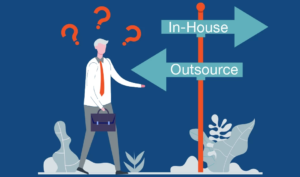
The Long-Term Financial Picture
When evaluated properly, outsourced IT support is not an expense—it’s a risk management and efficiency investment. Businesses gain predictable monthly costs, fewer emergencies, reduced downtime, stronger security, and better planning.
Over time, this stability compounds. Businesses that outsource IT support are better positioned to weather economic shifts, adapt to new technologies, and protect their reputations.
Frequently Asked Questions
Is outsourced IT support only for growing companies?
No. Even small, stable businesses benefit by reducing risk and improving reliability.
Can outsourced IT work with existing vendors and software?
Yes. A quality IT partner integrates with your current systems rather than forcing unnecessary changes.
What happens if we outgrow our IT needs?
Outsourced IT scales with you—no rehiring, retraining, or restructuring required.
Outsourcing IT Is a Strategic Decision
Wisconsin businesses that outsource IT support gain more than technical help. They gain peace of mind, operational resilience, and a technology roadmap aligned with their goals.
In a business environment where downtime, breaches, and inefficiency are increasingly costly, outsourcing IT support is one of the smartest decisions a local business can make.
Operational Risk, Downtime, and the Hidden Costs Wisconsin Businesses Underestimate
For many Wisconsin business owners, IT failures are still framed as “inconveniences.” A slow server. A crashed workstation. A network hiccup that gets resolved eventually. The real problem is that these events are rarely measured accurately—and therefore never fully understood.
Operational risk tied to technology failure is one of the most underestimated threats to small and mid-sized businesses across Wisconsin.
Downtime Is Not Just Lost Time — It’s Compounded Loss
When a system goes down, the immediate impact is obvious: work stops. What is less visible is how the damage multiplies after systems are restored.

Employees lose momentum. Customers lose confidence. Errors increase as staff rush to catch up. Leadership is pulled away from strategic work to manage fallout. In regulated industries, downtime can also trigger compliance breaches or missed reporting deadlines.
Wisconsin manufacturers, for example, often rely on tightly scheduled production cycles. A server outage during a production window can delay shipments, disrupt supplier relationships, and damage contracts. Service-based businesses experience similar ripple effects—missed appointments, delayed billing, and customer churn.
Outsourced IT support reduces these risks not by reacting faster, but by preventing failures from occurring in the first place.
Why Internal IT Models Struggle With Modern Business Complexity
Many Wisconsin companies still rely on a single internal IT contact or a “tech-savvy” employee who wears multiple hats. This model worked when technology environments were simpler. It fails in today’s landscape.
Modern IT environments include:
-
On-premise systems mixed with cloud platforms
-
Remote employees accessing business systems from multiple locations
-
Third-party SaaS tools integrated into daily workflows
-
Cybersecurity threats evolving weekly
-
Compliance requirements that demand documentation and controls
One person—no matter how capable—cannot maintain expert-level oversight across all of these domains.
Outsourced IT support introduces structured coverage, ensuring that each layer of your technology stack is managed by specialists rather than generalists.
Cybersecurity Is No Longer Optional for Wisconsin Businesses
Cybersecurity incidents are no longer rare events reserved for large corporations. Small and mid-sized businesses in Wisconsin are now the primary targets precisely because they are perceived as easier to breach.
Attackers understand that many local businesses:
-
Lack full-time security personnel
-
Rely on outdated hardware
-
Have inconsistent patching schedules
-
Do not test backups regularly
-
Trust employees without adequate security training
This combination creates opportunity.
The Financial Reality of Cyber Incidents
A single ransomware incident can cripple a business for weeks. Even if data is recovered, reputational damage can linger far longer. Customers may hesitate to share information. Vendors may reassess partnerships. Insurance premiums can rise sharply.
Outsourced IT providers approach cybersecurity as a continuous process, not a one-time setup. This includes:
-
Endpoint detection and response
-
Network monitoring
-
Email security
-
Access control management
-
Security awareness training
-
Incident response planning
Most importantly, security strategies are aligned with how Wisconsin businesses actually operate—balancing protection with productivity.
Compliance Pressure Is Increasing Across Wisconsin Industries
Many Wisconsin business owners assume compliance only applies to large organizations or highly regulated sectors. This is no longer the case.
Healthcare providers face HIPAA requirements. Retailers must maintain PCI compliance. Professional service firms increasingly face client-driven data protection standards. Manufacturers working with national partners are often required to meet cybersecurity benchmarks.
Failure to comply can result in:
-
Financial penalties
-
Contract termination
-
Legal exposure
-
Loss of customer trust
Outsourced IT support embeds compliance into daily operations rather than treating it as an annual task. Documentation, access controls, encryption, and audit preparation become routine—reducing stress and risk.
Strategic IT Planning vs. Reactive Firefighting
One of the most overlooked benefits of outsourcing IT support is strategic planning.
Internal teams are often consumed by urgent issues. Long-term planning is postponed repeatedly. As a result, businesses accumulate technical debt—outdated systems that become harder and more expensive to replace over time.

Outsourced IT partners help Wisconsin businesses:
-
Create multi-year technology roadmaps
-
Align IT investments with business goals
-
Plan for growth, acquisitions, or new locations
-
Budget predictably for upgrades
-
Avoid surprise failures
Technology becomes intentional rather than accidental.
Real Wisconsin Business Scenarios
Scenario 1: Professional Services Firm in Green Bay
A growing firm relied on aging servers and manual backups. An unexpected hardware failure resulted in partial data loss and several days of disruption.
After outsourcing IT support, backups were automated, systems were modernized, and remote access was secured. Productivity increased, and leadership gained confidence in scalability.
Scenario 2: Multi-Location Retailer in Eastern Wisconsin
Each location managed IT independently, leading to inconsistent performance and frequent POS issues.
Outsourced IT centralized management, standardized systems, and introduced monitoring—dramatically reducing outages and improving customer experience.
The Local Advantage of Wisconsin-Based IT Partners
Outsourcing does not mean outsourcing overseas. Wisconsin businesses benefit from working with partners who understand:
-
Local infrastructure challenges
-
Regional compliance expectations
-
Industry norms across the state
-
The importance of on-site support when needed
A local IT partner offers accountability that remote providers cannot match.
Financial Predictability and Long-Term ROI
Reactive IT spending is unpredictable by nature. Emergency repairs, rushed upgrades, and crisis response drive costs higher over time.
Outsourced IT replaces uncertainty with consistency. Monthly service models allow businesses to:
-
Forecast expenses accurately
-
Avoid large surprise bills
-
Extend equipment lifespan
-
Reduce downtime-related losses
Over time, the return on investment becomes clear—not just financially, but operationally.
Why Outsourcing IT Support Is a Competitive Advantage
Technology is now a differentiator. Businesses that operate reliably, securely, and efficiently gain an edge over competitors who struggle with outages and security issues.
Outsourced IT support allows Wisconsin businesses to:
-
Focus on core operations
-
Adapt quickly to market changes
-
Support remote and hybrid work
-
Meet compliance demands confidently
-
Scale without disruption
Outsourcing IT support is no longer a defensive decision—it is a strategic move that enables Wisconsin businesses to compete, grow, and protect what they have built.
Businesses that wait often do so until something breaks. Businesses that act proactively gain stability, clarity, and long-term resilience.
Why “Doing Nothing” Is the Most Expensive IT Decision Wisconsin Businesses Make
One of the most dangerous assumptions business owners make is believing that because nothing catastrophic has happened yet, their IT environment is “fine.”
In reality, most technology failures are slow-burn problems. They develop quietly—misconfigurations, outdated firmware, unpatched systems, undocumented access—until a triggering event exposes all of them at once.

Wisconsin businesses often delay IT investment for understandable reasons: margins matter, growth is incremental, and technology is not always viewed as revenue-generating. But the absence of visible problems does not indicate the absence of risk.
Outsourced IT support introduces continuous visibility. Issues are identified early, resolved before escalation, and documented so the same problem does not reappear in a different form months later.
The true cost of waiting is not just downtime—it is compounded vulnerability.
The Talent Gap — Why Hiring Internal IT Is Increasingly Unrealistic
Hiring internal IT talent in Wisconsin has become more difficult, not less.
Qualified professionals expect:
-
Competitive salaries
-
Benefits and career growth
-
Exposure to modern technologies
-
Reasonable workloads
Small and mid-sized businesses often cannot provide all of these simultaneously. As a result, internal hires may be underqualified, overworked, or short-term.
Even when a strong internal hire is made, turnover introduces serious risk. Knowledge leaves with the employee. Documentation is often incomplete. New hires must relearn systems under pressure.
Outsourced IT support eliminates dependency on a single individual. Knowledge is institutional, processes are documented, and continuity is preserved regardless of personnel changes.
This stability is especially valuable for Wisconsin businesses planning long-term growth or succession.
Cloud Adoption Without Strategy Creates More Problems Than It Solves
Cloud platforms promise flexibility, scalability, and cost savings—but only when implemented intentionally.
Many Wisconsin businesses migrate piecemeal:
-
Email moved to the cloud
-
Files stored across multiple platforms
-
Applications adopted without integration planning
-
Security controls applied inconsistently
The result is fragmentation, not efficiency.
Outsourced IT support ensures that cloud adoption aligns with:
-
Business workflows
-
Security requirements
-
Compliance obligations
-
Cost management goals
Cloud environments are designed holistically, not assembled reactively. This prevents surprise bills, performance bottlenecks, and security gaps that commonly plague unmanaged cloud deployments.
Vendor Management — The Hidden Time Sink for Business Owners
Internet providers, software vendors, hardware suppliers, cybersecurity tools, backup platforms—each has its own contracts, support channels, and renewal cycles.
For many Wisconsin business owners, managing vendors becomes an unpaid, unrecognized job. Time is spent troubleshooting finger-pointing between providers instead of running the business.
Outsourced IT support centralizes vendor management. Your IT partner:
-
Coordinates with vendors on your behalf
-
Ensures accountability
-
Reviews contracts and renewals
-
Recommends consolidation when appropriate
This alone often saves dozens of hours per year for leadership teams.
Disaster Recovery Is Not About “If” — It’s About “How Fast”
Most businesses have backups. Very few have tested recovery plans.
Backups that fail silently are common. Recovery procedures that only one person understands are risky. Recovery times that stretch into days can be fatal for customer-facing operations.
Outsourced IT support treats disaster recovery as a business continuity strategy, not a checkbox.
This includes:
-
Defined recovery time objectives (RTO)
-
Regular testing
-
Documented procedures
-
Off-site and immutable backups
-
Clear communication plans
For Wisconsin businesses facing severe weather risks, power outages, and infrastructure variability, this preparation is not theoretical—it is essential.
IT as a Growth Enabler, Not a Cost Center
When IT is managed reactively, it feels like a cost. When managed strategically, it becomes a growth enabler.
Businesses with outsourced IT support are better positioned to:
-
Open new locations
-
Support remote employees
-
Launch new services
-
Integrate acquisitions
-
Meet enterprise client requirements
Technology stops being a barrier and starts becoming leverage.
This shift in mindset is one of the most significant advantages outsourced IT provides.
The Psychological Cost of Unreliable Technology
This is rarely discussed, but it matters.
Unreliable technology creates chronic stress. Employees lose confidence in systems. Leadership becomes reactive. Small issues feel bigger because trust has eroded.

Outsourced IT restores predictability. Problems are addressed quickly, communication is clear, and expectations are set.
Over time, this stability improves morale, retention, and decision-making—factors that directly impact business performance.
Why Wisconsin Businesses Are Moving Away From Break-Fix IT
Break-fix IT appears cheaper on the surface, but it incentivizes delay. Problems are only addressed once they become painful.
This model:
-
Encourages short-term thinking
-
Fails to prevent issues
-
Creates unpredictable costs
-
Leaves security gaps unaddressed
Wisconsin businesses are increasingly abandoning break-fix models in favor of proactive, managed IT partnerships that align incentives correctly.
What to Look for in an Outsourced IT Partner (Without Sales Hype)
Not all IT providers are equal. Wisconsin businesses should look for partners who:
-
Emphasize documentation
-
Provide clear service agreements
-
Communicate transparently
-
Understand your industry
-
Offer strategic guidance, not just fixes
The right partner feels like an extension of your business, not a vendor.
Manufacturing & Industrial Businesses in Wisconsin — Where IT Failures Halt Production
Manufacturing is the backbone of Wisconsin’s economy, but it is also one of the most technologically fragile industries when IT is unmanaged.
Modern manufacturing environments rely on:
-
ERP systems
-
CNC machines connected to internal networks
-
Inventory management platforms
-
Supplier integrations
-
Legacy systems still critical to operations
When IT support is reactive or fragmented, small technical issues cascade into production stoppages.
Outsourced IT support ensures manufacturing systems remain stable, segmented, and protected. Networks are designed so that a single infected workstation cannot disrupt plant operations. Updates are scheduled around production cycles. Legacy systems are protected without breaking compatibility.
Most importantly, outsourced IT creates documentation and redundancy. When key personnel are unavailable, operations continue uninterrupted.
For manufacturers competing nationally and globally, uptime is not optional — it is a competitive advantage.
Healthcare & Medical Practices — Compliance, Privacy, and Zero Tolerance for Downtime
Healthcare organizations in Wisconsin face a unique combination of risk:
-
Strict regulatory requirements (HIPAA)
-
High-value patient data
-
Limited tolerance for system downtime
-
Increasing ransomware targeting clinics
Many small and mid-sized practices rely on outdated systems held together by informal processes. This creates serious exposure — even when patient care appears unaffected day-to-day.
Outsourced IT support brings compliance-driven structure. Access controls are enforced. Audit logs are maintained. Backups are tested. Incident response plans are documented.
This is not about fear — it is about operational maturity. Practices that manage IT professionally reduce legal exposure, maintain patient trust, and avoid disruptions that directly impact care delivery.
For healthcare providers, outsourcing IT is not delegation — it is risk management.
Legal Firms — When Confidentiality and Availability Are Non-Negotiable
Law firms operate on trust, confidentiality, and deadlines. Technology failures undermine all three.
Common challenges include:
-
Secure document sharing
-
Remote access for attorneys
-
Data retention requirements
-
Protection against targeted phishing attacks
-
Dependence on time-sensitive systems
Break-fix IT models are especially dangerous in legal environments because response delays directly affect client outcomes.
Outsourced IT support ensures law firms operate with enterprise-level safeguards:
-
Encrypted file access
-
Secure remote work environments
-
Email security tuned for legal threats
-
Backup systems that support rapid recovery
This allows attorneys to focus on advocacy rather than infrastructure.
Financial Services & Accounting Firms — Where Accuracy and Security Must Coexist
Accounting firms, financial advisors, and insurance providers manage some of the most sensitive data in existence.
Yet many still rely on fragmented systems adopted over time without strategic oversight.
Outsourced IT support introduces consistency:
-
Standardized security controls
-
Controlled access to financial platforms
-
Audit-ready documentation
-
Predictable performance during peak seasons
Tax season, audits, and regulatory deadlines leave no room for system instability. IT becomes a force multiplier when managed correctly.
: Retail & Multi-Location Businesses — Scaling Without Chaos
Retail environments face unique challenges:
-
Multiple locations
-
POS systems
-
Inventory synchronization
-
Staff turnover
-
Seasonal spikes in demand
Without centralized IT oversight, each location becomes its own island. Inconsistencies multiply. Security gaps widen.
Outsourced IT support unifies operations:
-
Centralized management
-
Standardized configurations
-
Secure remote access
-
Scalable onboarding and offboarding
This allows retail businesses to grow without sacrificing control.
Construction, Trades, and Field-Based Businesses — IT That Moves With the Work
Construction firms and trade businesses often underestimate their IT needs because much of their work happens off-site.
In reality, they depend heavily on:
-
Mobile devices
-
Cloud-based project management
-
File sharing
-
Scheduling platforms
-
Remote collaboration
Outsourced IT ensures field teams remain connected securely. Devices are managed. Data is protected even when equipment is lost or damaged. Systems remain accessible from job sites without exposing the business to unnecessary risk.

This flexibility directly improves productivity and responsiveness.
Professional Services & Consulting Firms — Protecting Reputation Through Reliability
Consulting, marketing, engineering, and professional service firms sell expertise and trust. Technology failures damage both.
Outsourced IT support ensures:
-
Reliable collaboration tools
-
Secure client data handling
-
Consistent performance during presentations and deliverables
-
Professional-grade infrastructure without internal overhead
For firms competing nationally, IT stability supports brand credibility.
Nonprofits & Educational Organizations — Doing More With Limited Resources
Nonprofits and educational institutions in Wisconsin face tight budgets but growing technology demands.
Outsourced IT allows these organizations to:
-
Access enterprise-level expertise
-
Control costs predictably
-
Improve data protection
-
Support remote staff and volunteers
Technology becomes an enabler rather than a burden.
Franchises & Regulated Multi-Entity Operations
Franchise models require strict consistency across locations while supporting local operations.
Outsourced IT ensures:
-
Centralized control
-
Local responsiveness
-
Compliance across jurisdictions
-
Rapid onboarding of new locations
This balance is extremely difficult to achieve without professional IT management.
Why Industry-Aligned IT Support Outperforms Generic IT
Generic IT support treats every business the same.
Industry-aligned IT understands:
-
Your workflows
-
Your risks
-
Your compliance obligations
-
Your growth patterns
Wisconsin businesses that partner with IT providers who understand their industry gain an advantage that compounds over time.
Long-Term Resilience in an Uncertain Economy
Economic uncertainty rewards businesses that are resilient, adaptable, and efficient.
Outsourced IT support strengthens all three:
-
Resilience through redundancy and planning
-
Adaptability through scalable systems
-
Efficiency through automation and optimization
For Wisconsin businesses navigating labor challenges, rising costs, and competitive pressure, these advantages compound over time.
Outsourcing IT support is no longer about convenience. It is about control—control over risk, cost, growth, and continuity.
Wisconsin businesses that make this shift proactively position themselves not just to survive, but to outperform competitors who remain reactive.
Manufacturing & Industrial Businesses — FAQ
Q: Why do manufacturing companies outsource IT support in Wisconsin?
Manufacturers outsource IT to prevent production downtime, secure connected machinery, protect ERP systems, and maintain stable operations without relying on a single internal technician.
Q: How does IT downtime affect manufacturing output?
Even short outages can halt production lines, delay shipments, disrupt inventory systems, and cause contractual penalties. Proactive IT prevents these cascading failures.
Q: Can outsourced IT support legacy manufacturing systems?
Yes. Professional IT providers specialize in securing and maintaining legacy systems while integrating them safely with modern networks.
Healthcare & Medical Practices — FAQ
Q: Is outsourcing IT safe for HIPAA-regulated medical practices?
Yes. In fact, outsourced IT is often safer because providers implement formal access controls, audit logs, encrypted backups, and documented compliance procedures.
Q: What happens if a clinic experiences a ransomware attack?
With proper IT management, systems can be isolated and restored quickly from tested backups, minimizing patient care disruption.
Q: Do small clinics need enterprise-level IT security?
Yes. Cybercriminals frequently target small practices because they often lack adequate protection.
Legal Firms — FAQ
Q: Why do law firms outsource IT instead of hiring in-house staff?
Outsourced IT provides broader expertise, faster response times, and stronger security without the cost of full-time internal teams.
Q: How does IT impact attorney productivity?
Reliable IT ensures secure document access, fast systems, and uninterrupted case work — especially for remote or traveling attorneys.
Accounting & Financial Services — FAQ
Q: What IT risks do accounting firms face during tax season?
System slowdowns, email compromises, and data access failures during peak periods can cause missed deadlines and compliance issues.
Q: Can outsourced IT scale during busy seasons?
Yes. Managed IT adjusts monitoring, performance, and support coverage during high-demand periods.
Retail & Multi-Location Businesses — FAQ
Q: How does IT outsourcing help multi-location retailers?
Centralized IT management ensures consistent security, synchronized inventory systems, and unified reporting across all locations.
Q: What happens when a POS system goes down?
Managed IT prevents outages through monitoring and ensures rapid recovery if issues occur.
Construction & Field Services — FAQ
Q: Why do construction companies need managed IT?
They rely on mobile access, cloud files, scheduling platforms, and secure communication between job sites and offices.
Q: What if a device is lost on a job site?
Managed IT allows remote locking, data wiping, and rapid replacement to protect sensitive data.
Manufacturing Case Study — Northeast Wisconsin
A mid-sized manufacturer experienced repeated ERP slowdowns during inventory reconciliation. Internal troubleshooting delayed production several times per quarter.
After transitioning to outsourced IT support:
-
Network segmentation isolated production systems
-
Scheduled updates eliminated surprise outages
-
Backup testing reduced recovery time from hours to minutes
Result: Production stability improved, overtime costs decreased, and customer fulfillment became predictable.
Medical Practice Case Study — Green Bay Area
A growing clinic relied on outdated workstations and informal password sharing. A phishing email nearly compromised patient records.
Outsourced IT introduced:
-
Multi-factor authentication
-
Email threat filtering
-
Encrypted backups with testing
Result: Compliance posture improved, staff confidence increased, and leadership reduced legal risk exposure.
Law Firm Case Study — Fox Valley
Attorneys experienced frequent VPN failures during remote hearings. Case access delays caused missed preparation windows.
After outsourcing IT:
-
Secure remote access replaced unreliable VPNs
-
Document systems were standardized
-
Support response times dropped dramatically
Result: Attorneys regained confidence working remotely without technical interruptions.
Retail Case Study — Multi-Location Wisconsin Business
A retailer expanded from two to six locations. Each store used different systems, creating reporting inconsistencies.
Managed IT unified:
-
POS configurations
-
Inventory synchronization
-
Centralized security controls
Result: Leadership gained real-time insight across locations and reduced shrinkage.
Construction Firm Case Study — Regional Contractor
A field-based company struggled with lost devices and file version confusion.
Outsourced IT implemented:
-
Mobile device management
-
Cloud collaboration tools
-
Secure access controls
Result: Field teams worked faster, data loss incidents dropped, and office coordination improved.
If you’re ready to move from reactive IT to strategic growth, connect with Rhumbu LLC and schedule a consultation tailored to your Wisconsin business
Outsourcing IT support in Wisconsin allows businesses to reduce costs, increase security, and boost productivity. From local manufacturers in Green Bay to offices in Appleton or Milwaukee, professional IT services provide scalable solutions, proactive monitoring, and peace of mind.
Contact Rhumbu LLC today to schedule a consultation and see how outsourcing IT support can transform your Wisconsin business.